Monday, April 9, 2012

GOP antics took ugly turn

Just when I thought it was safe to deduce partisan politics couldn’t get any more bizarre in Ohio, another story emerges which boggles the mind.

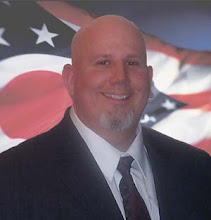
Bill Yarbrough was an erstwhile candidate for the Libertarian Party in 2010: he sought the 3rd District State Senate seat then. For this year’s election cycle, he made the decision to re-identify himself as a Republican and challenge incumbent congressman Pat Tiberi for that party’s nomination for Ohio’s District 12 seat. At his Website he even discusses frankly the fact he “ran as a third party candidate to learn the ropes” about pursuing public office.

Since getting to know him during our respective campaign trails two years ago, I came to admire Yarbrough. Naturally, I was disappointed to learn he had chosen to make the switch in party identities. But, I will do my best to respect his choice – the freedom for him or anyone else to do so is one of the many little things which make America great.

That choice, however, led to circumstances I doubt Yarbrough (or anyone else, for that matter) could have anticipated.

When I spoke with him during the recent Libertarian Party of Ohio state convention, he told me when he began his run for Congress he contacted each of the Republican Party chairs in each county the 12th District touches. His main goal in doing so was to seek potential endorsements from the county parties.

What he got, instead, from Delaware County’s Executive Committee chair Bob Mann was a complaint filed with the Ohio Elections Commission alleging Yarbrough had committed federal election fraud.


And the heinous crime about which Mann felt so strongly that he sought federal felony charges to be brought against him?

Yarbrough identified himself as “Republican” on his candidate petitions.

That’s right: for engaging in the sinister act of realigning himself with the Grand Ol’ Party, it was not enough in Chairman Mann’s eyes to petition the OEC to have Yarbrough removed from the Republican Primary ballot – Mann was fully ready to have him prosecuted and incarcerated.

So, instead of being able to run an effective primary campaign, Yarbrough had to begin pouring money into his legal defense, spend time publicly clearing his name in the weeks leading-up to the March 6 primary, and watch the inevitable stress on his wife and children mount.

Needless to say, Tiberi coasted to his party’s nomination by a wide margin.

This is where my blood begins to boil over this situation. I don’t give a damn what your party affiliation may be, no one can deny that Mann was perfectly willing to risk destroying the life of an innocent man, a good man, a family man with young children. And, he was willing to do so for the narrow, repugnant purpose of preserving the status quo.

To all of you who identify as Republicans, there is no middle ground on this item. Anything less than an unequivocal repudiation of Mann’s actions constitutes complicity and approval. Sympathy for Yarbrough is cheap. You need to show a backbone and fully denounce what Mann did.

Furthermore, it is easy to see Chairman Mann clearly wanted to set a precedent that was intended to have a chilling effect on anyone further down the road who might dare challenge any Republican incumbent within the party – especially if they’re running as a liberty candidate or constitutional conservative.

So, Tea Partiers, take heed of Bill Yarbrough’s ordeal. To those of you who insist the path to restoring America must be accomplished by reforming The Republican party from within, does your beloved political party really want that reform?

In his run for State Senate two years ago, Yarbrough successfully earned the endorsement of local Tea Party groups and identifies heavily with the Tea Party movement.

Now, we know what the Republican Party was willing to do to him.

What will they be willing to do to you?

Tuesday, April 3, 2012

Olbermann wears-out another welcome

The inimitable Keith Olbermann has once again found himself wanting for a job.

Evidently, in the waning days of the month of March, he was terminated by Current TV for breach of contract. As is being reported by those who simply may have been bored due to a lack of real news to cover, the folks at Current got tired of him being an incomparable ass.

Being that much of an ass is not new to Olbermann. It was the catalyst for his parting ways with ESPN in 1997 as well as Fox Sports Network in 2001.

When it comes to his abrupt departure from MSNBC, his droning and baseless commentary of the Tea Party’s inherent racism opened the door for karma to rear its ugly head. As was noted by members of the Tea Party in Dallas, the percentages of people of color at Tea Party rallies was dramatically higher than could be found on that network’s daily line-up of political coverage.


True to form, Olby didn’t let this obvious hypocrisy deter him from perpetuating this meme – for what would be the remainder of his tenure at MSNBC.

One thing about his dismissal from that channel which continues to surprise me is the fact no one in mainstream media or even an online alternative source was able to reach the following observation: Olbermann got bitten by the quota bug.

I have no doubt executives at MSNBC were feeling significant heat for maintaining such a monochrome corral of talking heads while allowing their primetime darling to decry the absence of color at Tea Party events. "Where are these people?" he once droned.

It had not yet occurred to me when the network hired Cenk Uygur (also known for his work on The Young Turks) for what would prove to be an eight-month run how desperate executives there were to combat the issue. It was when they hired Rev. Al Sharpton to fill the 8 p.m. slot that my epiphany happened.

Perhaps the clearest example that the era of Olby was waning at MSNBC came when he felt compelled to bring his college diploma with him to work to prove he earned his degree from Cornell University (if you watch the video, the highlight takes place at the 1:40 mark).

And, now, he managed to irritate executives enough at a network co-founded by Al Gore – of all people – to prompt his latest dismissal.

Karma: she is as unforgiving as she is entertaining.

Tuesday, March 27, 2012

The Morality Card versus the Race Card

To the inevitable chagrin of readers who lean to the right, it is time to restate the obvious: former Pennsylvania Senator Rick Santorum is blurring further the lines between the Democratic and Republican parties.

The only genuine differences between those two parties are their target audiences (in terms of appealing to their respective voter bases) and the occasional controversy du jour.

While I already have examined Santorum’s argument for Right-Wing collective salvation, his campaign stop at the Greenwell Springs Baptist Church in Louisiana on March 19 and the more notable activities therein have prompted me to take my analysis one step further.

Conservatives and libertarians alike have long lamented the left-wing propensity for playing the Race Card in political discourse – a tactic which especially hit overdrive when President Barack Obama began to emerge as a frontrunner in the Democratic nomination process in 2008.

However, in 2012 Santorum may have perfected a mirror image of this argumentation device and given the American Right Wing its own card to play when the debates and public sentiment aren’t going the way they like: the Morality Card.

Playing the Morality Card at this juncture of the primary and caucus process appears to be the logical next step for Santorum’s campaign. He has tried to portray himself as a fiscal conservative and staunch defender of Christian values. The problem for him is his voting record does not back that up, having cast “Yea” votes for No Child Left Behind, Medicare Part D, and various pieces of legislation he knew contained earmarks for Planned Parenthood. That is just the tip of the ice berg.

So, what is a candidate left to do when they cannot run on their record? The answer is find the quickest boogeyman against-which to redirect everyone’s attention. In Santorum’s case, it’s the steady decline in America’s moral compass. It is the perfect way to rally the GOP’s Christian Conservative base – pandering to voters who place much of their focus on issues of morality.

I am a lifelong Christian. I have recently come to understand the importance of Evangelism in spreading and promoting the Gospel of Jesus Christ.

I have no problem seeing right through Santorum’s rhetoric.

Please tell me I’m not the only Christian who does.

Cheney story illuminates wider ballot access issues

Don's note: if you're not fully familiar with the developments surrounding the would-be independent candidacy of Brian Cheney for Allen County Commissioner, read the initial story at The Lima News and the recent follow-up article.

First and foremost, this press release is not authored with the intent to comment on any of the particulars surrounding the Allen County Board of Elections’ decision to reject Brian Cheney’s candidate petitions for county commissioner, his ties with other local public figures, or even Cheney himself.

The one hidden story in the recent events that warrants greater exploration is the fact Cheney – in order to run as an independent candidate – had to gather almost seven times as many signatures as any of the major party candidates and more than 13 times as many as a minor party candidate.

State election laws require independent candidates for an office to gather signatures equivalent to one percent of the votes cast in the previous election for the given electoral jurisdiction. In the case of Allen County Commissioner in 2012, a prospective independent had to get 330 valid signatures – compared to 50 for someone vying for a major party nomination and 25 for those of us affiliated with a minor party.

It should not be difficult to conclude the wide disparity in requirements is nonsensical.

As a current and past candidate for elected office, have I benefited from such variations? Yes, of course. Do I agree with this setup? That answer is, “Absolutely not.”

The only possible legitimate argument for placing such a high threshold for independent candidates is the fact any registered voter may sign one of their petitions regardless of how the Ohio Secretary of State’s office lists their party affiliation (which is another issue in and of itself regarding violation of voters’ privacy rights – but as usual, I digress) – thus an independent candidate has a potential “unfair” advantage by having any-and-all would-be petition signers available to them.

In truth, it is an underhanded means of deterring anyone who would demonstrate the audacity to engage in the electoral process outside of the party system.

For my personal perspective, it is my hope the situation involving Brian Cheney proves to be nothing more than an honest mistake. It would seem obvious to me the inevitable “mad dash” for signatures – created by the State of Ohio’s disparate candidate requirements – is sure to increase the likelihood of mistakes being made. Also, as evidenced by my body of essays and posts in social media, I simply am not a fan of aggressive prosecution for non-violent offenses.

As all this relates to Ohio election laws, my hope is now that the potential consequences of these provisions have hit close-to-home for someone in leadership in the state’s prevailing majority party (meaning, Allen County Republican Party Chair Keith Cheney), we may finally see some long-overdue reform of those laws that actually fits such a description.

Sunday, February 19, 2012

Don’s Debates – when the Straw Man ariseth

It’s been a few months since I enjoyed a good argumentation rodeo. One presented itself on a friend’s discussion thread in social media recently. I had been resisting the urge to throw-in my two-cents’ worth (or five bucks, depending on perspective).

By the way, as a matter of pure happenstance that friend is a fellow Libertarian.

In this latest installment of Don’s Debates, a video spoofing stereotypical comments made to libertarians by three pro-big-government characters was posted.

It appeared as though it was going to turn into a run-of-the-mill libertarian-love-fest in the comments section. Right after I posted a quote by Frédéric Bastiat there came a pair of replies by someone less libertarian-leaning. Another individual followed those two comments with his own selection of a Bastiat quote: “It is as if the socialists were to accuse us of not wanting persons to eat because we do not want the state to raise grain.”

Then the straw men were erected by the less-libertarian participant. He contributed the following observation: “State raised grain is inferior in some way to privately raised grain? Less iron or protein, or you just don't like anything any government might do? Will it feed fewer people?”

The banter continued after I had logged-out to start getting ready for work. It became a tad circular in nature while I was away. It had been my intention to not embroil myself in an elongated point-counterpoint session. But, I allowed Mr. Statist to suck me into the conversation when he opted to proclaim those who disagreed with him weren’t adequately making their point.

So, I gave-in and replied with the following:

The problem, [name omitted], is when government (be it here or anywhere else in the world) decides to participate in any industry – in the case you're attempting to make, agriculture – virtually all actions must be run through its internal bureaucracy which makes the production and delivery of the grain inferior: not the grain itself.

When the production and delivery are inferior, less of it gets to its recipients in a timely manner. The delays and inevitable loss to spoilage leads to increased hunger.

You're engaging in a complete straw man argument.

You're deliberately omitting the fact when government is thrust into a sector of the economy it soon disapproves of competition. This leads to laws and regulations that squeeze-out private-sector competitors and leave people few-to-no choices of alternate sources for that grain.

Adding to the potential for rampant hunger is the unavoidable political component when those elected (or appointed) insist distribution be fair, which then requires a massive regulatory establishment to oversee said fairness.

That doesn't factor [further] increased hunger in certain segments of the population where the political connections aren't as vibrant – thus the component of fairness becomes flexible in its definition as a result of cronyism.

Does cronyism exist in the free market?

Of course.

But, in a free market we are all consequently free to pursue our desired goods (such as grain) from other sources when that situation becomes intolerable. Or, depending on the circumstances of one's situation, some among us are then free to take it upon ourselves to engage in that industry and produce that good.


Mr. Statist responded later that morning with this end-all-be-all post:

“We don't have anything even approaching a free market. Talk about straw men!”

Sigh...

Sunday, February 5, 2012

Right-wing collective salvation no less destructive than the Left’s

“One of the criticisms I make is to what I refer to as more of a libertarianish right. They have this idea that people should be left alone, be able to do whatever they want to do, government should keep our taxes down and keep our regulations low, and that we shouldn’t get involved with the bedroom, we shouldn’t get involved with cultural issues – that is not how traditional conservatives view the world... There is no such society – that I’m aware of – where we’ve had radical individualism and that it succeeds as a culture.”
Senator Rick Santorum (R-PA), interview on NPR, August 4, 2005


In political analysis, temptations are everywhere. They lie-about like a minefield – designed to snap-up and bite you at the first careless step taken.

I’ve stepped on a couple of mines already in my own still-short and obscure foray into politics. As Santorum’s comments quoted above continue to make the rounds in social media, the minefield-like temptation is to engage early and often in ad hominem commentary.

But, such an approach inevitably would steer the overall discussion away from the real issue. The man is not where our focus should be: we must dismantle the premises he has promoted with such comments. Senator Santorum and others who share his views will come and go. But, failing to adequately and accurately refute the ideology and philosophy behind such views – at a time such as this in our society – is to miss an opportunity to expand the greater understanding of what liberty truly means.

So, suffice it to say I wholeheartedly disagree with Santorum. Now, here is why...

The logic flaw behind comments such as Santorum’s is he encourages a path toward public virtue of a right-wing nature that runs in parallel to the left’s.

The growing outlook among the left in America has become the quest for “collective salvation” via redistribution of income. President Barack Obama has discussed this concept on more than one occasion over the years.

The central premise with their argument is the establishment and its crowd of elites must be entrusted with saving us all from ourselves and our uncontrollable propensity – as mere, weak mortals – for the sins of greed and material avarice.

They – and they alone – know what is best for leading society into that public virtue.

As the concept of self-reliance continues to decay in America, one need only to look at the condition and plight of our larger cities to recognize how inevitably dehumanizing Progressive governance is.

With the sociological outlook being advanced by Santorum, we can see there is an effort underway to recharge the batteries for furthering what is the undeniable right-wing equivalent to Obama’s social agenda.

The central concept is the same: government must be granted the power and authority to save us from ourselves. The left wants to social-engineer us toward charitable virtue. The right seeks to social-engineer us toward moral virtue.

The left would have us believe that prosperity for all – fair and equal in their eyes – only can be achieved through government intervention. The right would have us believe that morality for all only can be achieved in the same manner.

Redistribution of income has had an irrefutable destructive effect on the American work ethic and dedication to self-reliance. As we have reached the point where 47% of the population is receiving some form of public assistance, this trend only will continue toward total dependence on the state. As long as availability continues to expand, so will not just the demand for it but the expectation.

The result is simple: the consequence of reliance on the state is our society is eating itself from the inside out.

The combination of welfare, tighter economic controls, and regulation of business has created an environment that is best described as “the race to the bottom” where people do what has been predicted by free-market economists for roughly one-and-a-half centuries: many seek to do the minimum in order to get by in life while others aggressively seek-out every possible loophole in the laws to exploit the opportunities for ill-conceived gain.

The same principle will apply to state-sponsored morality.

As the government attempts to nudge, push, and then steamroll citizens into behavior control as well as limitations on individual personal choices, the outcome as a result of securing America’s moral fabric is bound to be the exact opposite of the promise of easier access to salvation.

It will happen because we will be conditioned to rely on government and its body of laws to guide our consciences as opposed to scripture, prayer, and God.

Human nature will inevitably kick into overdrive as people become eager to settle for the legally acceptable minimum standards in moral conduct while others look for the aforementioned loopholes. With rebellion being humanity’s natural social state, the results can only descend from there as others engage in outright defiance of the law.

And, just as we have witnessed with the Left continually arguing for more and more economic and financial control by the government each time it becomes apparent the present body of laws is not “doing the trick” for society, the right will engage in the same pattern if allowed the opportunity (just examine the history of the war on drugs).

Those on the right – such as Santorum – who expound the notion it is possible to codify God’s law into man’s law unfailingly omit one vitally important fact: the process of codification ultimately is left in the hands of politicians.

What could possibly go wrong there?

It is apparent that Senator Santorum and those who agree with him either have forgotten or chosen to disregard a critical axiom in Christian society just as his counterparts on the Progressive Left have chosen to spurn it: Virtue cannot exist in the absence of free choice.

It is our free will, given to us by God, that makes us uniquely human. It is only through our individual free will that any of us can reach the glory of salvation.

Saturday, January 14, 2012

Activism, in style


While the story of Anthony Buehler [embedded below] steadily spreads across the online social media world and many (myself included) support him in his endeavor to draw full and proper attention to excessive use of force by law enforcement, I have a second pressing issue I wish resolved.

Take a good look at the picture above: where can I get a T-shirt like that?!

"D'Anconia Copper" is easy to read but I am rather curious what the rest of the printing below it says. Unfortunately, what you see up top was the best screen grab I could get during the second news segment used in the video.

Also, is it one of a matching set? You know: another has on display "Reardon Steel"; a third option offers "Wyatt Oil"...